


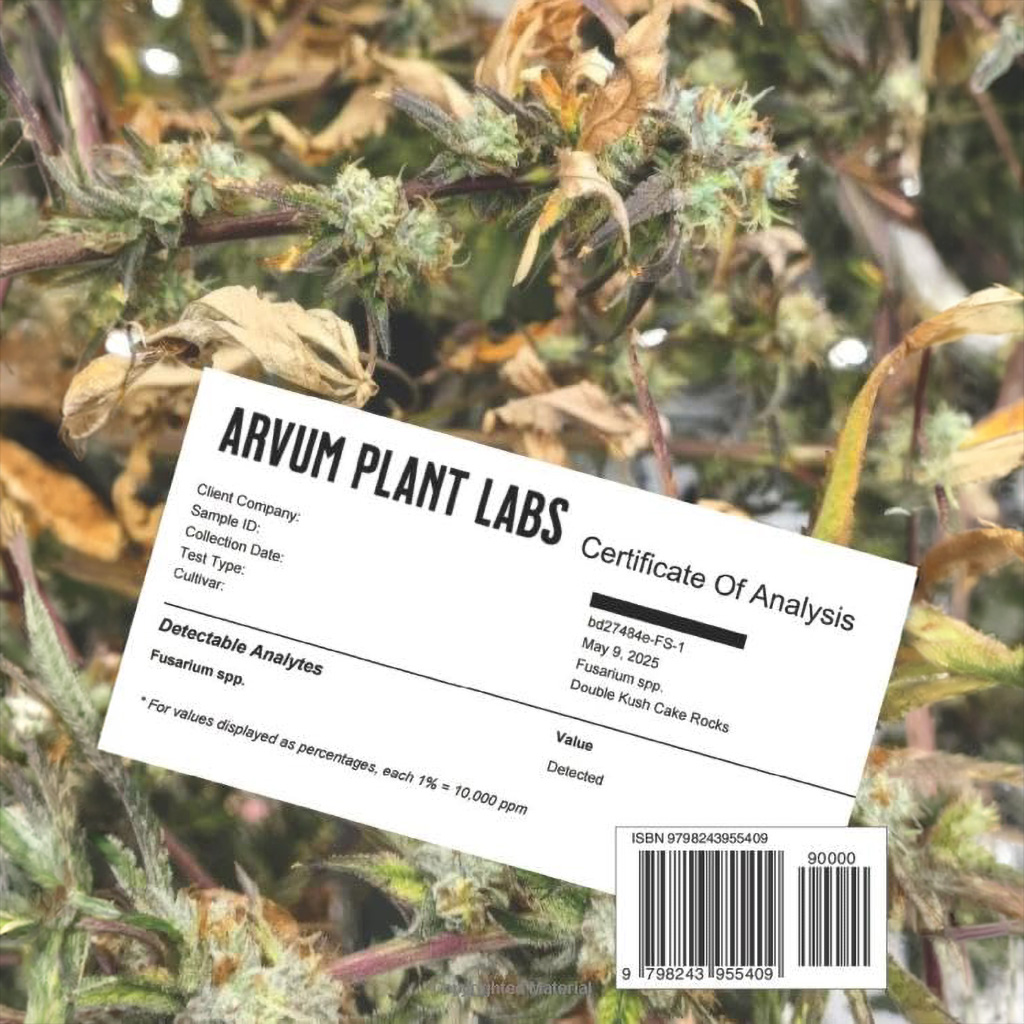

Preventing and Reversing Pathogenicity and Virulence in Nature’s Most Common Fungal Endophyte
by Heber Hall
Fusarium is the most common fungal endophyte in nature, present in nearly every growing environment. Yet despite its ubiquity, it is one of the most misunderstood organisms in modern cultivation. This misunderstanding has led to unnecessary crop loss, failed remediation attempts, and financial devastation for growers worldwide.
Rather than viewing Fusarium as an enemy to be eradicated, this book explores what truly drives its shift from benign endophyte to aggressive pathogen. By understanding the nutritional, environmental, and biological triggers that control pathogenicity and virulence, growers can work backward from even the most severe infections—halting disease progression, reversing damage, and preventing future outbreaks.
High-density, contained media and hydroponic systems offer an extraordinary level of control over nutrition, irrigation, and environmental conditions. When managed correctly, these controllable factors allow growers to directly influence Fusarium’s genetic expression. This book breaks down how specific nutrients, environmental stresses, and microbiological dynamics activate or repress virulence genes—and how to intentionally manage those factors to keep Fusarium permanently non-pathogenic.
You’ll also learn how to build a suppressive microbiome in both the root zone and phyllosphere, and how natural inputs and targeted biological strategies can stop and reverse active virulence without relying on harsh chemical interventions.
Grounded in extensive real-world application, this work draws from documented remediation cases where complete reversal of pathogenicity was achieved—often resulting in plant health, vigor, and productivity that exceeded pre-infection levels.
This is not theory. It is a practical, systems-based approach to working with biology instead of against it—transforming one of agriculture’s most feared fungi into a manageable, and even beneficial, component of a healthy growing ecosystem.